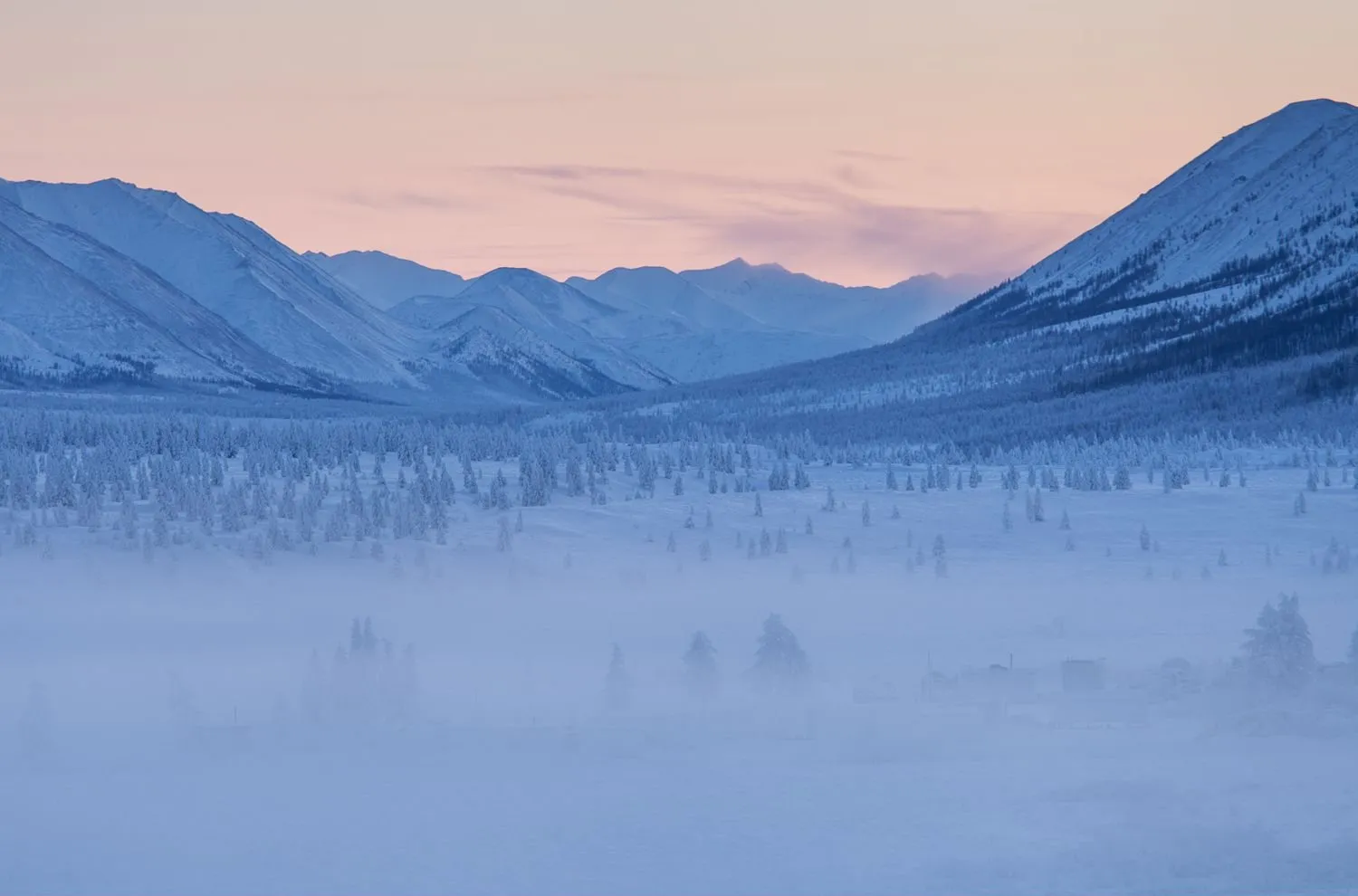
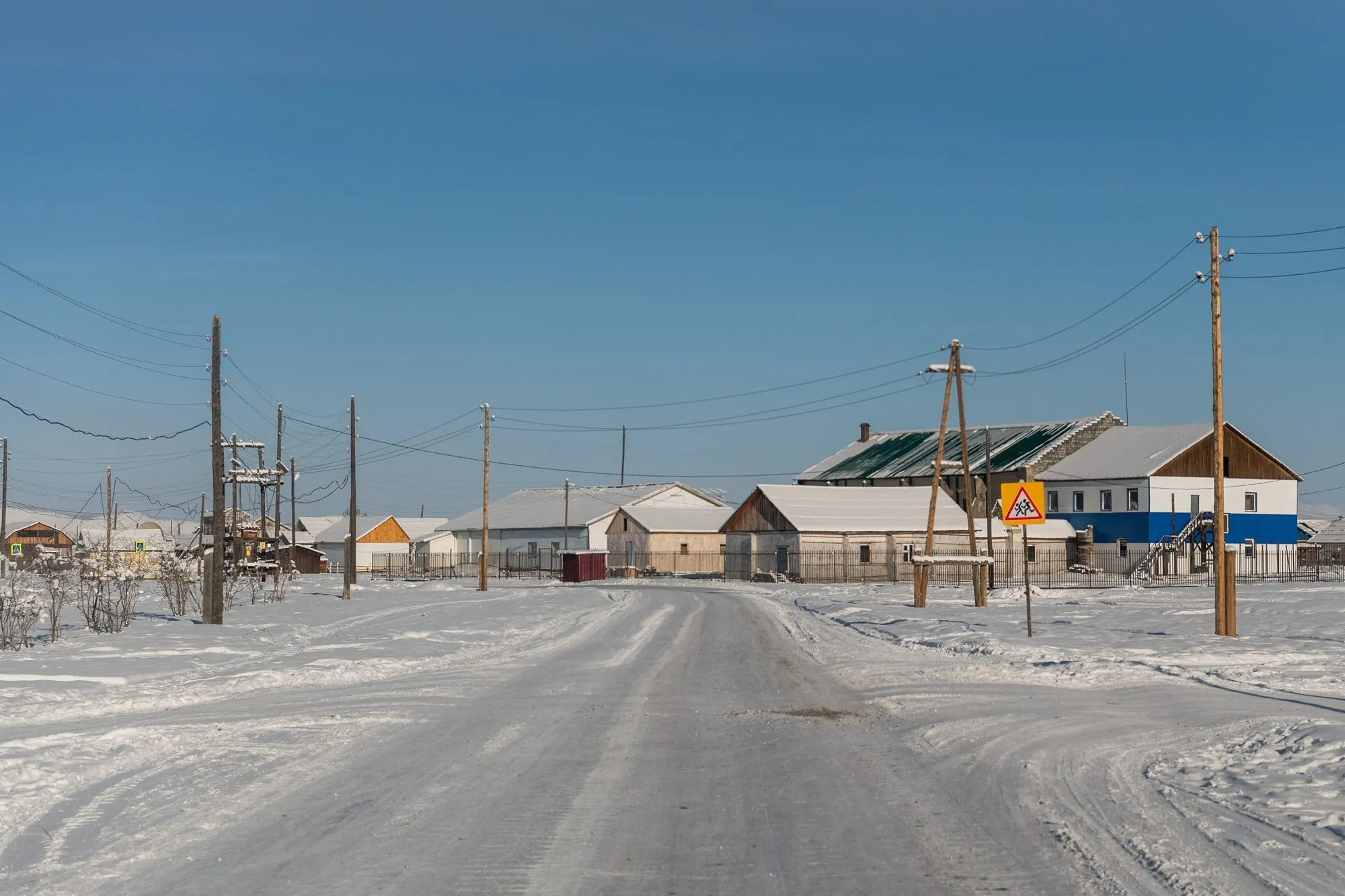
About 500 people live in Oymyakon, a village of wooden houses in a valley of the Yakutian highlands, and every winter they live through temperatures that would stop most cities. The average January day here is −46 °C. In 1933 the weather station recorded −67.7 °C, one of the lowest temperatures ever measured where people live.
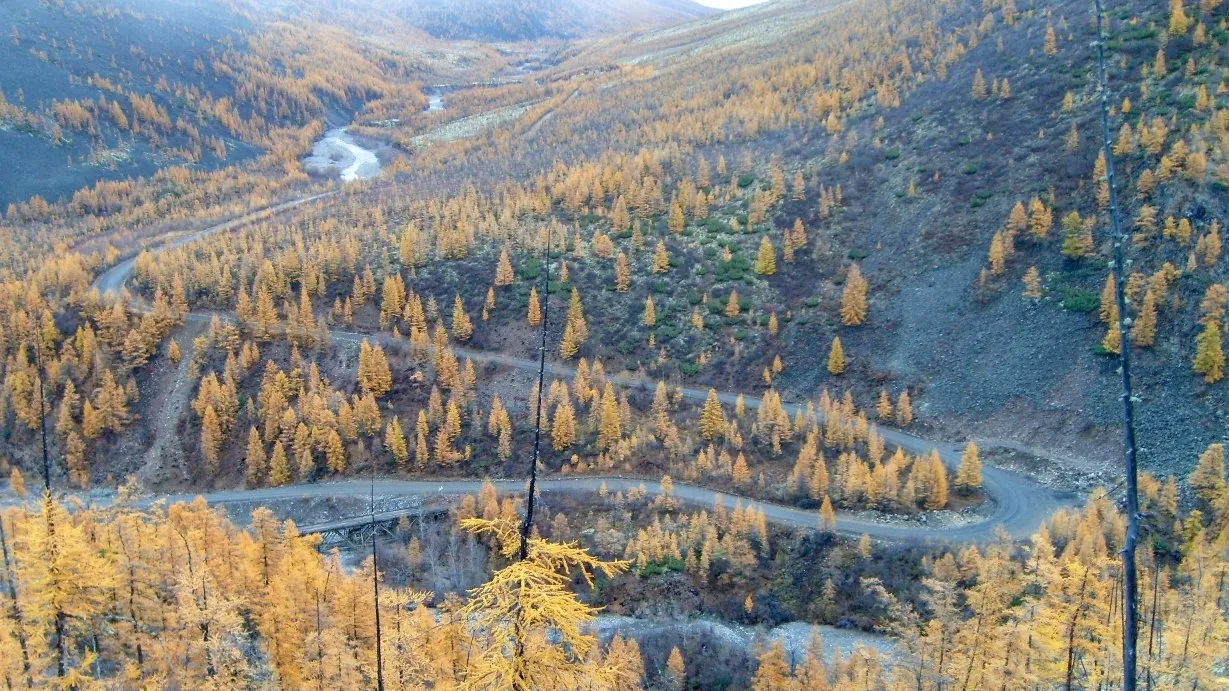
Getting there is half the story: two days on a frozen road from Yakutsk, across a river with no bridge, along the infamous Road of Bones. This guide covers the route, the cold, and the very real practical problems of travelling in Russia right now.
The route at a glance
Tap a dot for details. Drag and zoom to explore.
Is it really the coldest village on Earth?
Almost certainly the coldest one you can visit, with a footnote. On 6 February 1933 the weather station in the valley between Oymyakon and the neighbouring village of Tomtor recorded −67.7 °C. Verkhoyansk, 629 km away as the crow flies, had recorded −67.8 °C in February 1892. The two towns have argued over the title ever since, and between them they are known as the Northern Hemisphere’s Pole of Cold.
A monument in Oymyakon claims an even lower −71.2 °C, from January 1924. That figure was never officially accepted.
The other extreme is just as striking: in July 2010 Oymyakon reached +34.6 °C. Few places on Earth swing more than 100 °C between their records.
What the cold is like
In January the average temperature is −45.7 °C, and the average night falls to about −49 °C. Local schools stay open until it drops below −55 °C. In midwinter there are only a few hours of daylight.
At these temperatures exposed skin can freeze within minutes, breath turns to ice crystals on scarves and eyelashes, and phone and camera batteries drain fast. Keep spares inside your clothes, close to your body.
Before you go: Russia in 2026
This is the part that decides whether the trip is possible at all.
- Government advice. The US government tells its citizens not to travel to Russia (its highest level, 4), and the UK Foreign Office has advised against all travel there. Check your own government’s advice. If it advises against travel, many travel insurance policies won’t cover you.
- Money. Visa and Mastercard suspended operations in Russia in March 2022. Cards issued outside Russia don’t work in Russian shops or ATMs. Bring all the cash you will need, and plan how to exchange it.
- Visa. Most visitors need a visa. Russia offers an electronic visa to many nationalities; check the official list for yours before you plan anything else.
- Phone data. International eSIMs, Airalo’s included, generally don’t cover Russia. Plan on a local SIM, bought with cash in Yakutsk.
Getting there
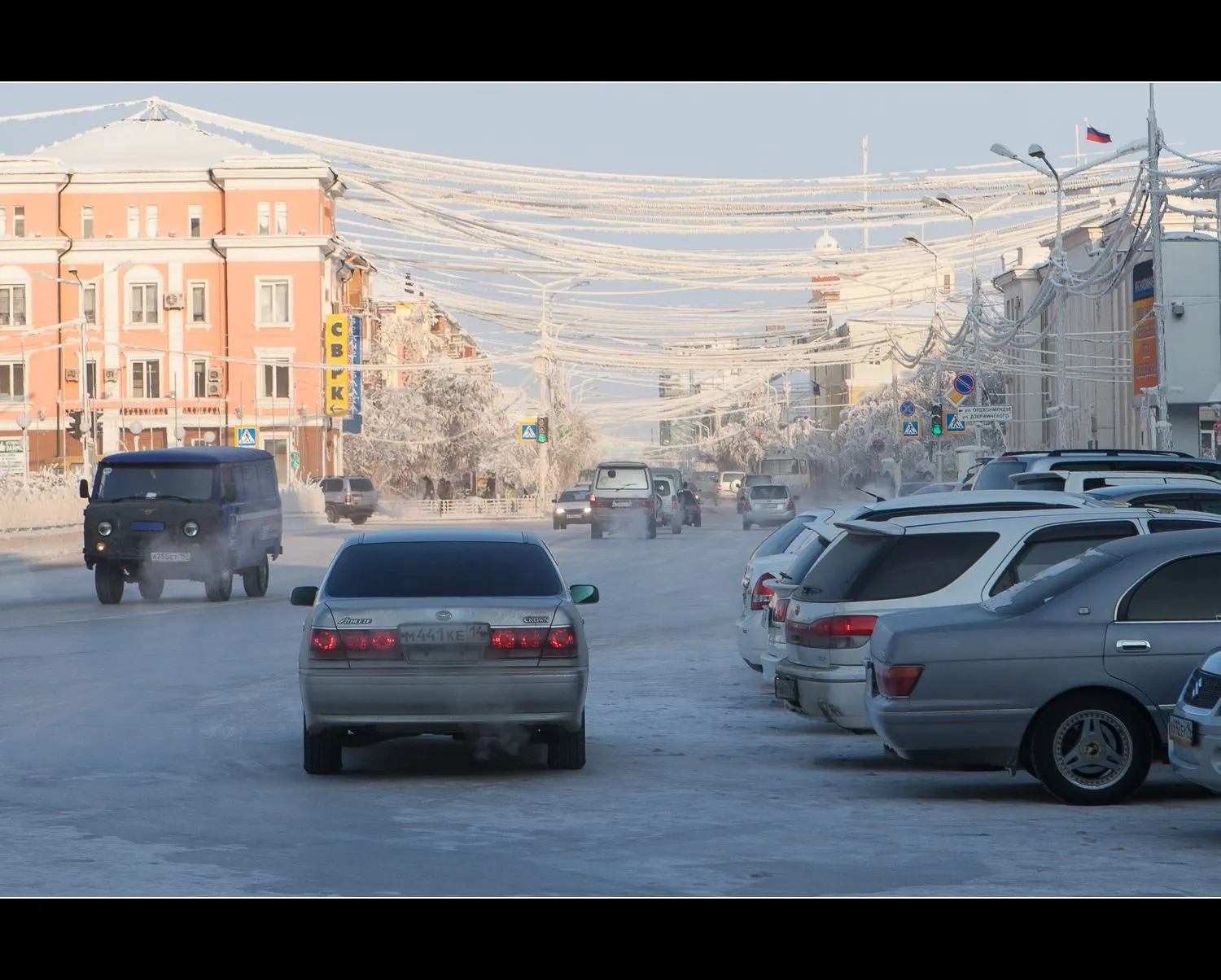
Fly to Yakutsk, the capital of the Sakha Republic (Yakutia). Everything else is by road.
By road it’s 922 km from Yakutsk to Oymyakon (our measurement, using OpenStreetMap routing):
| Leg | Distance |
|---|---|
| Yakutsk → Khandyga | about 407 km |
| Khandyga → Kyubeme | about 321 km |
| Kyubeme → Tomtor | about 154 km |
| Tomtor → Oymyakon | about 39 km |
- Cross the Lena. Yakutsk sits on the west bank of the Lena River, and there is still no bridge. In winter you drive across on an ice road; in summer you take a ferry. In the weeks when the ice is forming or breaking up, there’s no crossing at all.
- Follow the Kolyma Highway east to Khandyga, the usual overnight stop, and on to Kyubeme.
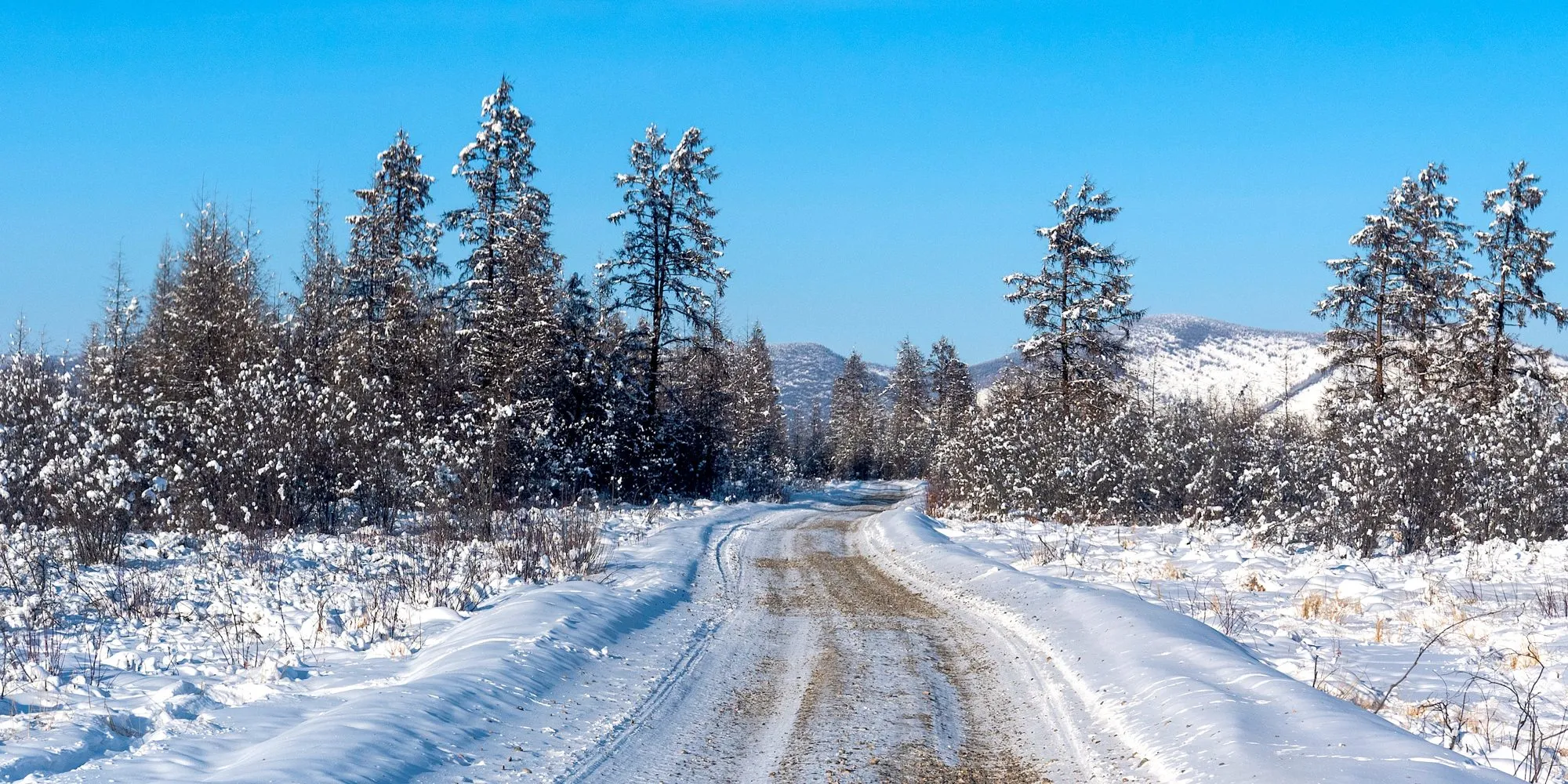
- Turn off for Tomtor and Oymyakon, about 190 km of smaller road.
Most visitors take two days each way and go with a winter tour from Yakutsk in a minibus or 4x4, with a driver who knows the road. Driving yourself is possible, but only with a properly winterised vehicle and serious cold-weather experience.
Don’t let a navigation app choose the route. East of Tomtor, the Old Summer Road towards Kadykchan is abandoned and its bridges are gone. In 2020 a young driver froze to death after following Google Maps onto it. When we measured this route, Google Maps couldn’t route the Kyubeme–Tomtor road at all and offered a detour of more than 1,100 km.
When to go
To experience the cold, go between December and March. January is the coldest month. Summer is mild (July averages about 15 °C), and the valley is green, but you lose the reason most people come.
Oymyakon has hosted a Pole of Cold festival in some winters, including a car rally from Yakutsk. Dates change from year to year, so check before you plan around it.
Where to stay
There are no hotels in the usual sense. Visitors stay in guesthouses and family homestays in Tomtor and Oymyakon, nearly always arranged through a tour operator in Yakutsk. Expect simple rooms and warm stoves; the toilet is often outdoors.
What to pack
- Layers: thermal base layers, a fleece or wool mid-layer, and a down parka rated for −50 °C or colder.
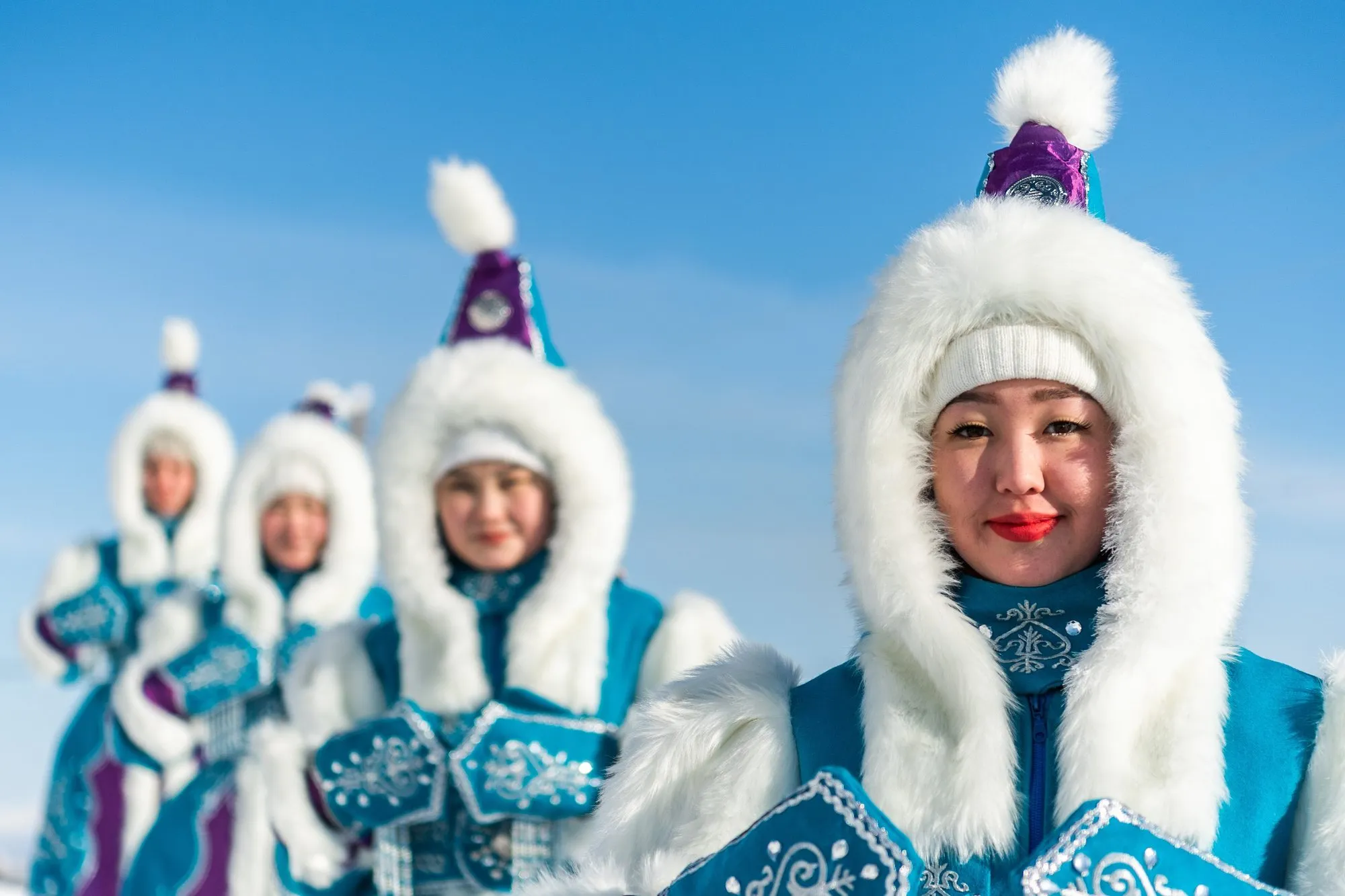
- Boots rated for extreme cold. Locals wear fur boots (unty); ordinary winter boots aren’t enough.
- Mittens over thin gloves, a fur or down hat, and a face covering.
- Spare batteries, kept inside your jacket.
- Cash. See “Money” above.
Visiting with respect
Oymyakon is a working village, not a theme park. Ask before you photograph people or their homes, buy what you can locally, and follow your hosts’ lead on the cold: they know exactly how long it’s safe to stay outside.
Along the way
Sources
- Wikipedia: Oymyakon (climate records and population)
- Wikipedia: R504 Kolyma Highway (route, history, Old Summer Road)
- Wikivoyage: Oymyakon
- US State Department: Russia travel advisory
- UK Foreign Office: Russia travel advice
- PBS NewsHour: Mastercard and Visa suspend operations in Russia (March 2022)
- Russia Discovery: Yakutia expedition to the Pole of Cold (route and overnight stops)
We last checked this guide on 12 Oct 2026. Roads, fees and rules change. If something is out of date, tell us at support@nexaround.com.