
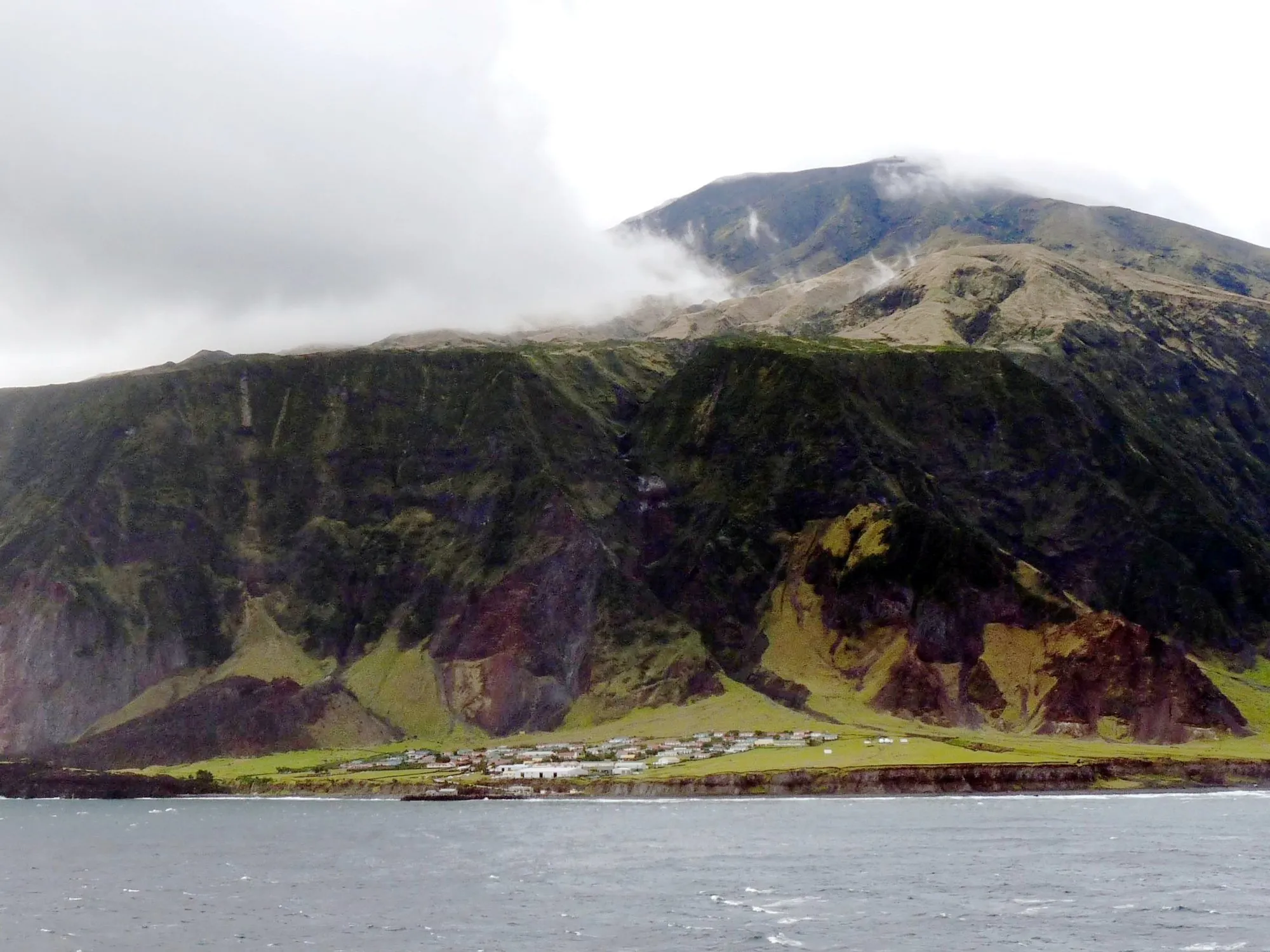
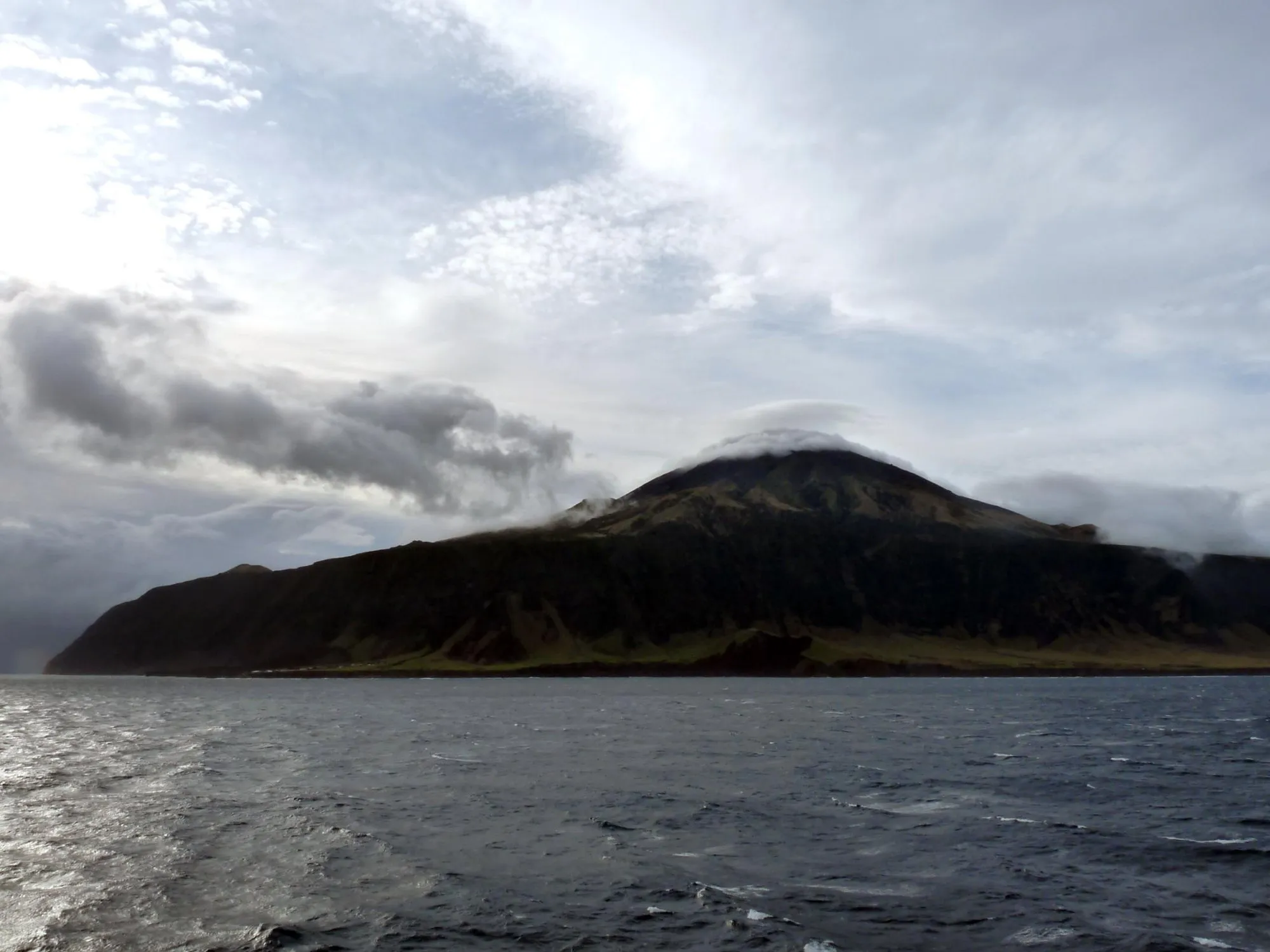
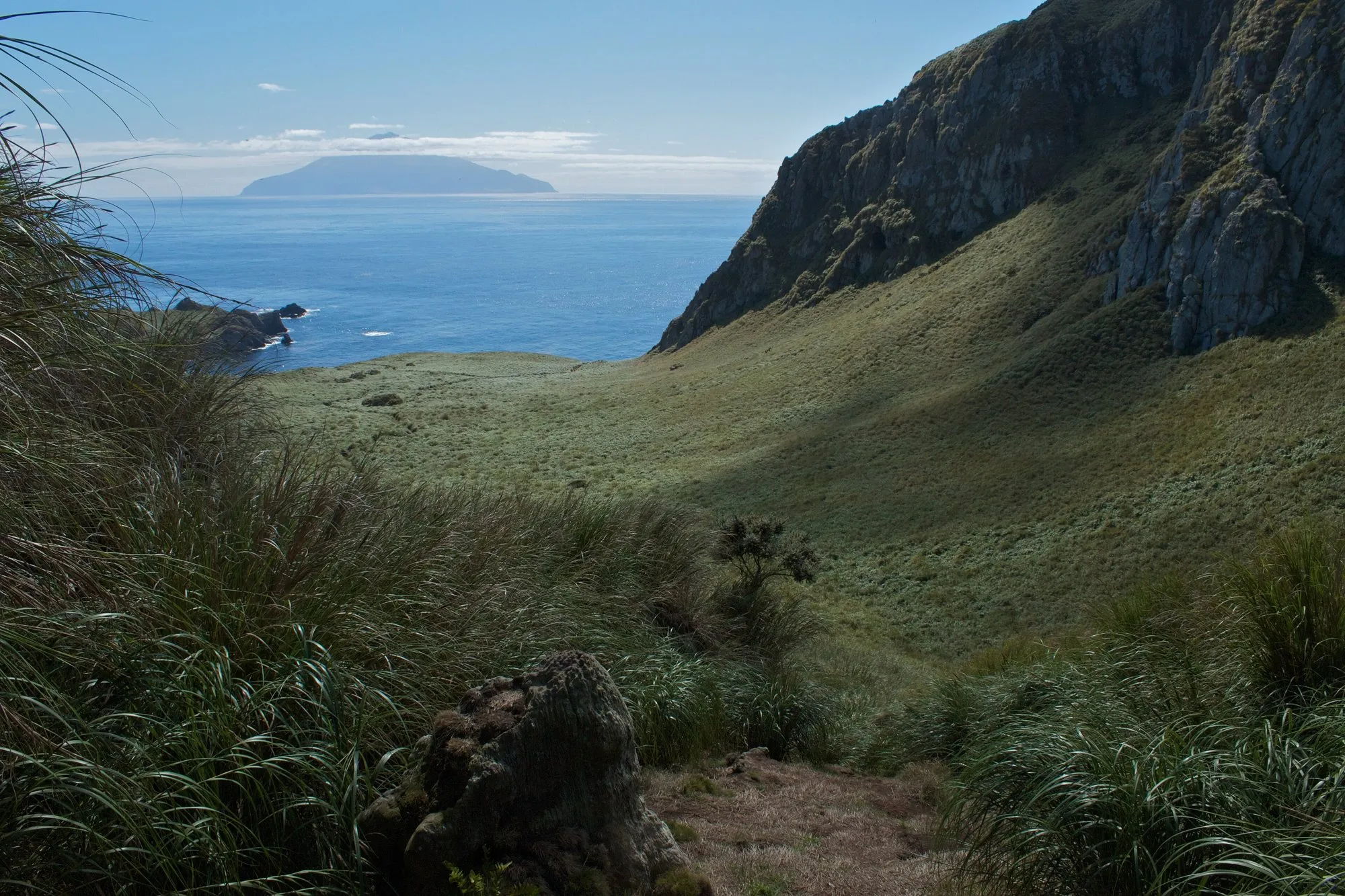
Tristan da Cunha is a volcano in the middle of the South Atlantic, with one village on a narrow strip of flat land at its foot. Its 222 residents live 2,437 km from the nearest other community, on St Helena, and 2,810 km from Cape Town. There is no airport. The only way in is by sea.
Visiting is possible, but it takes planning months ahead, the island government's approval, and luck with the weather. This guide explains how it works.
The route at a glance
Tap a dot for details. Drag and zoom to explore.
How remote is it?
Edinburgh of the Seven Seas, the island’s only village, is 2,437 km from St Helena, the nearest other inhabited place, and 2,810 km from Cape Town. The island is about 11 km across, and almost all of it is the slopes of Queen Mary’s Peak, a 2,062 m volcano. The settlement sits on the one strip of flat land along the north-west coast.
Tristan is part of the British Overseas Territory of Saint Helena, Ascension and Tristan da Cunha. The currency is the pound sterling.
Step 1: get permission
You can’t just turn up. Every visit needs approval from the island government first. Start months ahead:
- Read the official Visits pages and the Visits Planning Guide, which sets out the terms and conditions for visitors.
- Email the island’s Tourism Coordinator at tourism@tdc-gov.com with who you are, why you want to come, and when.
- Only book a berth once your visit is approved.
The island was closed to all outside visitors from March 2020 to March 2023, and health rules can still change quickly. Check the current position when you apply.
Step 2: find a berth
All scheduled ships to Tristan leave from Cape Town, and there are only a few sailings a year:
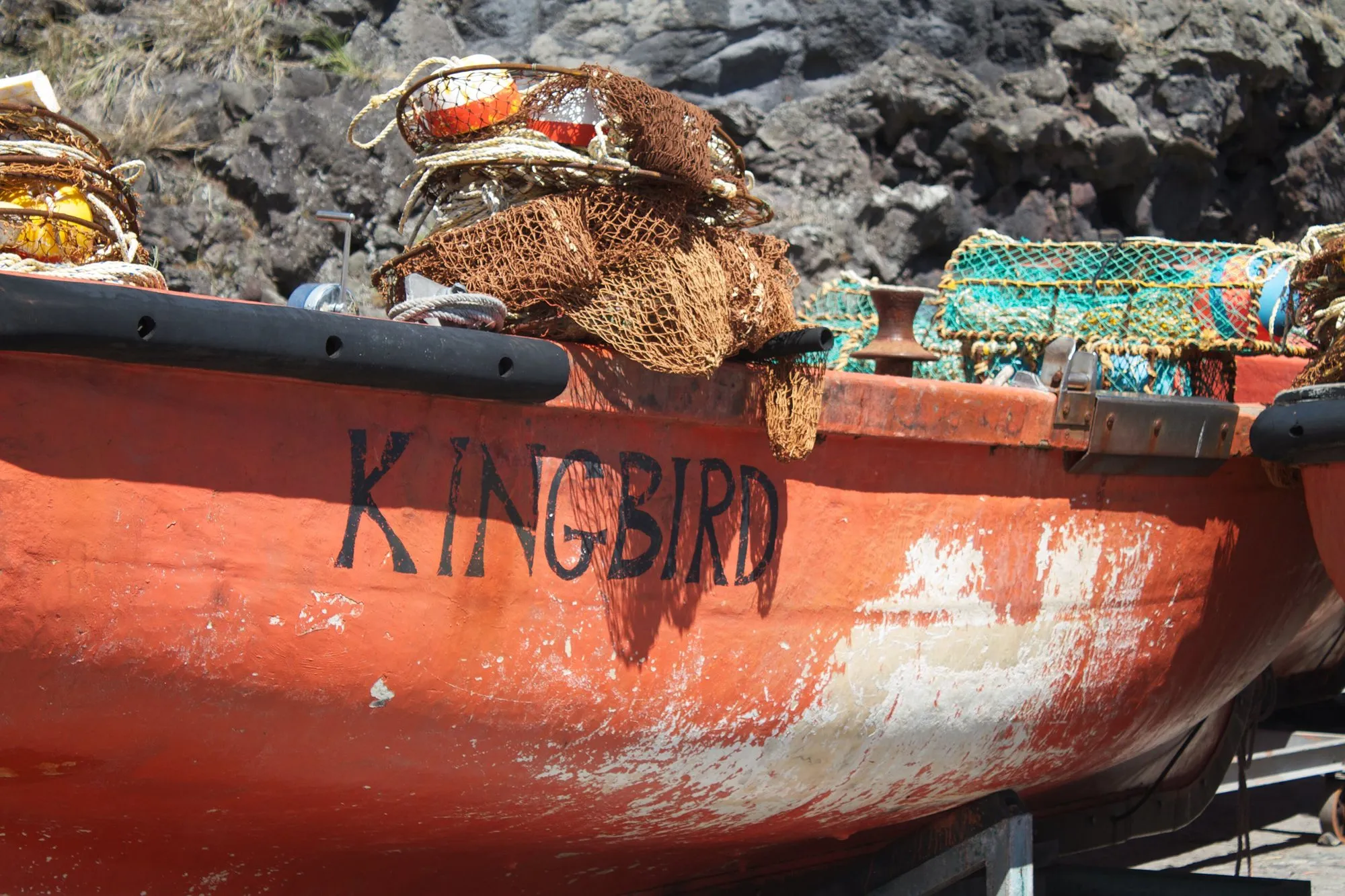
- Fishing vessels that work the island’s waters carry a few passengers. The official site says only 12 berths are available on them, which is why visitor numbers stay so low.
- The SA Agulhas II, a South African research and supply ship, makes an annual voyage to the islands.
- Expedition cruise ships call occasionally, usually for a day or less, when the weather allows a landing.
The voyage from Cape Town takes about six days. Berths are often booked up long in advance.
Step 3: landing, if the sea allows
There’s no harbour for big ships. Vessels anchor offshore, and people and cargo come ashore by small boat when the swell allows. Sometimes it doesn’t, for days. Build spare days into your plans at both ends, and expect your departure date to move too.
Where to stay and eat
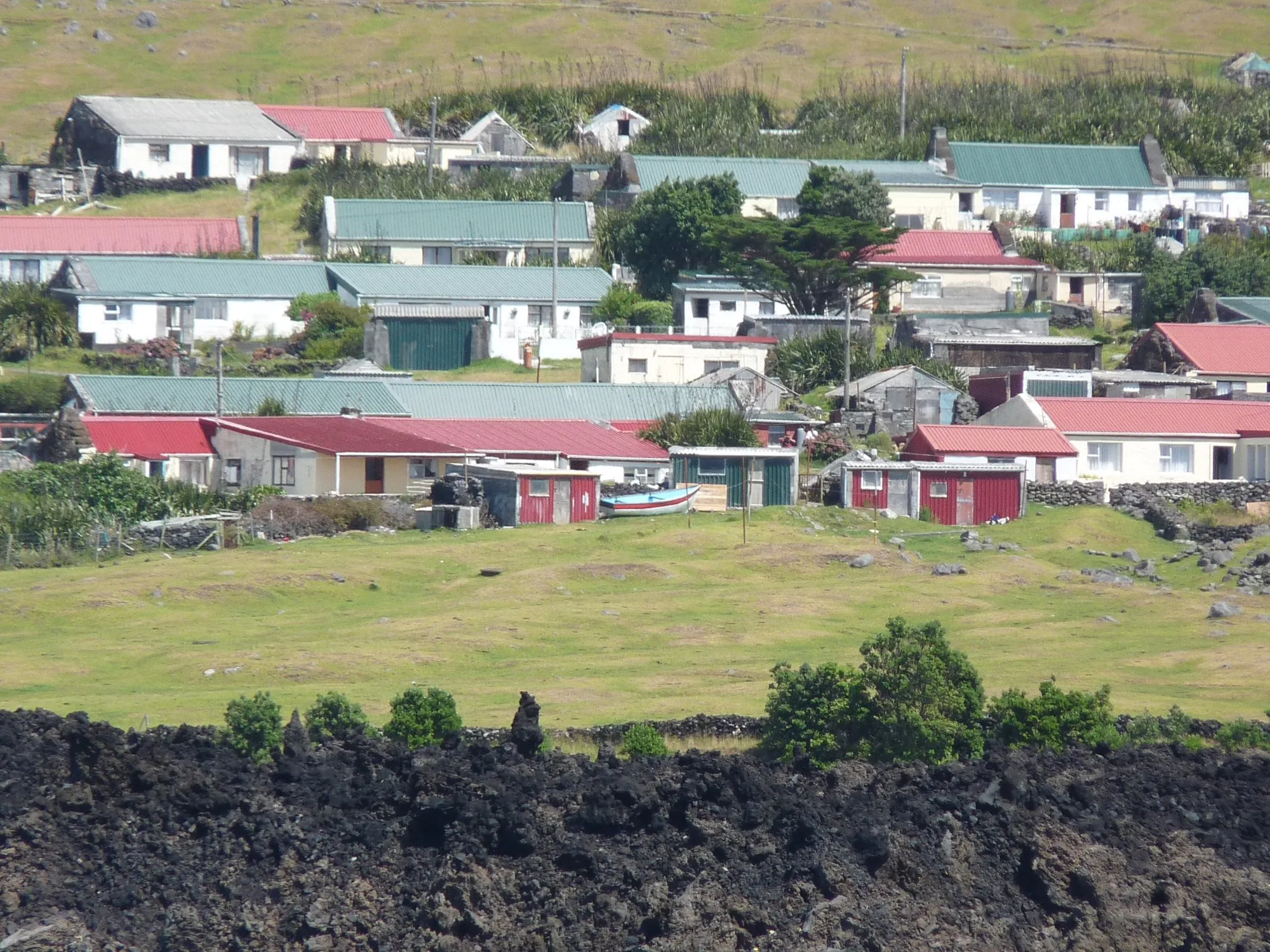
There are no hotels, no restaurants and no package tours. Visitors stay in guesthouses and homestays with island families, arranged through the tourism office, which lists the options and costs. The Café da Cunha in the village serves visitors.
What to do
- Climb Queen Mary’s Peak. A long, steep day on the volcano’s slopes to the 2,062 m summit, often in cloud. The official site has route reports; go with an islander who knows the way.
- Walk the 1961 volcano. In October 1961 an eruption right next to the village forced the evacuation of all 264 residents, who were taken to Britain; most came home by 1963. Paths now cross the volcanic park.
- Visit the Thatched House Museum to see how islanders lived.
- Play golf on what is surely one of the world’s remotest courses.
- Join an excursion around the island, arranged locally.
- Don’t swim in the sea. The official guide is clear that there is no safe sea swimming.
Before you go
- Money: bring pounds sterling in cash, and check in advance what, if anything, can be paid by card.
- Insurance: you’ll need cover that includes medical evacuation from a place with no airport.
- Time: with about six days at sea each way, your stay, and possible weather delays, plan on three to four weeks away from home, or more.
Free stops on this route
Places that cost nothing to visit. Rules for staying overnight are in the guide above.
- Free stop
Inaccessible Island
Uninhabited, about 35 km south-west.
- Free stop
Nightingale Island
Uninhabited, about 34 km south-south-west.
Along the way
Sources
We last checked this guide on 12 Oct 2026. Roads, fees and rules change. If something is out of date, tell us at support@nexaround.com.


.jpg)
